
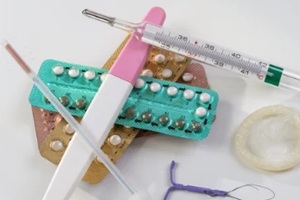
 Say you started the pill at 22 because it fit your schedule and never gave you trouble. That same pill can carry a very different risk profile by 42, especially once something in your health history has shifted along the way.
A new diagnosis, a new prescription, or the slow arrival of perimenopause can each nudge your birth control options out of range, usually without any obvious sign. A routine visit is typically where that gets caught.
Birth Control by Age Begins with Matching a Method to Your Daily Routine
The pill, patch, and ring fail about 7% of the time with typical use, according to the CDC’s 2024 figures, mostly because of missed doses and inconsistent timing rather than any flaw in the method itself. The implant and IUDs sit much lower, between 0.1 and 0.8%, since there is nothing to remember day to day.
That gap alone can make IUD insertion or the Nexplanon implant worth raising at your next visit. Behind the numbers sits the CDC’s U.S. Medical Eligibility Criteria for Contraceptive Use, 2024, a four-category system built around health and age. A 1 means no restriction; a 4 means the method should not be used at all.
That system explains why the pill, patch, and ring carry a 1 before age 40 and step up to a 2 afterward, since the benefits typically still outweigh the risk. The implant never carries a restriction at any age, and IUDs match that from 20 onward, with only a 2 for younger patients.
A New Diagnosis or Medication Can Rule Out a Method That Worked Before
A method with estrogen can move into the CDC’s higher-risk categories for multiple reasons including these 3:: migraine with aura, elevated blood pressure, and smoking at 35 or older.
Migraine with aura is the visual or sensory warning some people get before a headache hits, things like flashing lights, blind spots, or a tingling sensation. Combined hormonal methods jump to category 4 here, the CDC’s most serious rating, reserved for when the health risk outweighs any benefit.
If aura shows up for the first time, that is worth a call to your provider before your next refill. Sudden weakness, slurred speech, or vision loss is different and needs emergency care immediately, not a scheduled visit.
Elevated blood pressure works differently. Controlled hypertension and readings up to 159/99 drop combined methods to category 3, where the balance tips toward risk outweighing benefit, and 160/100 or higher pushes that to a 4. Your last several readings, not just today’s, give a provider the clearest picture.
Smoking after 35 changes the math again. Fewer than 15 cigarettes a day moves combined methods from a 2 to a 3, and 15 or more brings it to a 4. Non-estrogen methods, IUDs, the implant, and progestin-only pills stay at a 1 or 2 throughout, so they remain available once a combined method no longer fits.
Weight, Medications, and PCOS Can Also Change the Fit

Weight tells a smaller story here than people expect. A body mass index (BMI) of 30 or higher leaves IUDs, implants, and progestin-only pills at category 1 and nudges estrogen pills, patches, and rings to a 2, so extra weight alone rarely rules much out. A new prescription matters more, since that same CDC table flags interactions between certain seizure medications and hormonal contraception.
Polycystic ovary syndrome (PCOS) is a different story, since combined pills are the first-line treatment for irregular cycles and high androgen symptoms under the 2023 international PCOS guideline. That is why managing PCOS and choosing birth control often happen at the same visit, with migraine, blood pressure, and smoking status all weighing on the decision, just as they would for anyone else.
Birth Control During Perimenopause Remains Advisable Until Menopause Is Confirmed
Cycles can become unpredictable well before menopause arrives.The Menopause Society’s 2025 patient guidance describes swings of 7 days or more early in the transition, stretching to 60 days or longer later on. None of that means ovulation has stopped, so anyone avoiding pregnancy still needs birth control until a full 12 months pass without a period.
One missed period does not settle the question either way. What helps more is bringing actual dates, not a general impression of being irregular, so your provider can see the real pattern rather than guess at it.
This same stretch often brings hot flashes, and the pill, patch, and ring are commonly prescribed to manage those symptoms when birth control is still needed. On the CDC’s scale, those methods move from a 1 to a 2 once you turn 40, though the health factors already covered matter more than ageitself.
Understanding how contraception needs change during perimenopause can help you prepare for this stretch in more detail, and a provider knowledgeable about menopause and perimenopause care can assist you with symptoms that fall outside birth control entirely. Age is rarely the deciding factor; the specific health details above usually are, and a visit is where all of them get weighed at once.
A Birth Control Review Starts with Notes You Can Gather Before the Visit
Patients often search for this as OB-GYN birth control counseling, but a birth control review is just a normal part of ongoing reproductive health care, not evidence that something is wrong.
 Coming prepared helps more than anything else. A calendar of recent cycles, your current method, how long you have been on it, and anything that has changed since your last visit all give a provider somewhere real to start.
New diagnoses, new prescriptions or supplements, blood pressure readings, and any episodes of aura all count as changes worth flagging. Shifts in bleeding patterns, mood, or sex drive are just as valid a reason to bring this up.
Bring Your Birth Control Questions to Your Next Visit
Our all-women team at Raleigh Gynecology & Wellness has been part of these conversations for Raleigh, North Carolina patients for more than 30 years. Come with the notes above, or just come with questions, and we will sort through the options together. Schedule your visit online or call 919-636-6670.