
Essential Takeaways:
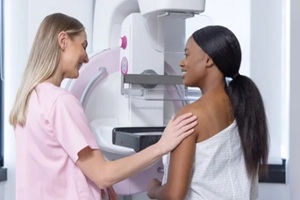 A clinical breast exam adds a trained provider’s touch to the breast care you already practice at home, catching changes that can be hard to notice on your own.
- Clinical exams and imaging serve different purposes and work best together, not as substitutes for one another.
- Your ideal exam schedule depends on your age and health history and is best set through a conversation with your provider.
- Dense breast tissue and a family history of breast cancer can both call for closer monitoring.
- Knowing what to expect during the exam can make scheduling one feel far less intimidating.
When a Self-Check Leaves You With Questions
You’ve probably checked your breasts for anything that feels unusual while in the shower or lying in bed at night. Breast tissue naturally shifts with your cycle, weight, and age, so without another point of comparison, it’s hard to know if what you’re feeling is new or just familiar variation. That is what a breast exam is for.
What Happens During a Clinical Breast Exam
A clinical breast exam typically takes place as part of your annual wellness visit, though your provider can also perform one anytime you have a concern between visits. The exam itself usually takes just a few minutes. Your provider will visually check the breast and skin for changes in size, shape, or texture, then press systematically across the breast and underarm, where tissue extends and lymph nodes sit close to the surface.
Breast tissue can feel lumpy in some areas and smooth in others, and providers are trained to identify when findings may warrant further examination. Your provider will also ask about any changes you’ve noticed since your last visit, including nipple discharge, skin dimpling, or new areas of pain, since your own observations add context to what they feel during the exam.
Why a Trained Hand Catches What a Self-Check Can Miss
Self-checks help you learn what is typical for your own body over time, and that familiarity is genuinely useful. But breast tissue changes with hormonal cycles, age, and body weight, and it can be difficult to tell whether a change you noticed at home is a normal shift or something that may indicate a problem developing.
A provider who performs exams regularly notices differences between one side and the other, changes in skin texture, or areas of firmness that might not stand out to someone checking her own body. A clinical breast exam does not replace imaging. Newer imaging technology has shown higher detection rates than older methods, but a clinical exam still adds another layer of information your provider can use to guide your care.
How Clinical Exams and Imaging Work Together
A clinical breast exam relies on touch and visual inspection, while a mammogram uses imaging to detect changes in breast tissue that may not yet be large enough to feel. Current guidance calls for women at average risk to begin mammography screening at age 40, continuing every one to two years after that.Many practices now also offer 3D mammography, which captures breast tissue in layers rather than a single flat image for a more detailed view.
For women younger than 40, or in the years between mammograms, a clinical breast exam gives your provider another opportunity to check for changes. Your provider can help you decide which combination of clinical exams and imaging fits your age and health history.
When More Frequent Monitoring Makes Sense
A family history of breast cancer in a first-degree relative, such as a mother or sister, can raise your personal risk and may lead your provider to recommend starting screening earlier or adding imaging.
Dense breast tissue is another factor worth raising with your provider because it can make it harder to detect changes on a standard mammogram, and it is also associated with a higher risk for breast cancer. If you’ve been told you have dense breast tissue, or if you have a personal history of an abnormal finding, your provider can build a monitoring plan around those specific factors.
What to Do if You Notice a Change Between Visits
Certain changes are worth having evaluated rather than waiting for your next annual visit. These include:

- A new lump or thickened area that feels different from the surrounding tissue, especially one that lasts through more than one menstrual cycle.
- Persistent pain in one specific area of the breast, rather than the general tenderness that can come with your cycle.
- Dimpling, puckering, or a change in the texture of the skin over the breast.
- Unusual swelling in the breast or underarm area that does not go away on its own.
- Discharge from the nipple that appears without squeezing, particularly if it is bloody or limited to one breast.
Most changes women notice turn out to be related to normal hormonal shifts or benign tissue changes, but a clinical breast exam gives your provider the chance to evaluate what you’re feeling and determine whether any additional testing makes sense.
Schedule Your Breast Exam With Raleigh Gynecology & Wellness
For more than 30 years, Raleigh Gynecology & Wellness has provided gynecology-only care to women across Raleigh, with an all-women provider team that takes the time to talk through your breast health.
If it’s been a while since your last clinical breast exam, or if you have questions about the right screening plan for you, schedule an appointment with Raleigh Gynecology & Wellness today.