
 Women may notice their bodies changing in their 40s, even when eating and exercise habits stay the same, and perimenopause is often part of the reason. Research following women through the menopause transition links it to faster fat gain and declining lean mass, and shifting hormones make weight around the belly more likely. The scale can hide these shifts, because total weight climbs while the balance of fat and lean mass shifts underneath it.
Lifespan data on calorie burn does not point to a sudden metabolic crash in the 40s, though sleep, genetics, activity levels, and natural aging are all involved. Realistic habits, such as strength training and better sleep, support health through this stage, and persistent changes should prompt a visit to a gynecologist.
When Perimenopause Begins and How Long It Lasts
Perimenopause usually begins in a woman’s mid- to late 40s and lasts about four years on average, according to the U.S. Department of Health and Human Services (HHS) Office on Women’s Health. The range spans two to eight years. Hormone levels rise and fall unpredictably during this time, which is why periods become irregular and hot flashes or poor sleep can appear.
How Perimenopause Alters Body Fat and Muscle Mass
Research from the Kaiser Permanente Division of Research, which summarized findings from the federally funded Study of Women’s Health Across the Nation, found that women experienced twice the rate of fat accumulation once the menopause transition started, while lean mass began to decrease. Both changes persisted for approximately two years following the last period before stabilizing.
Weight on the scale rose, without a jump at the start of the transition, because fat gains accompanied lean mass losses. The number alone can therefore understate what is changing.
The Mayo Clinic notes that the hormonal changes of menopause tend to make weight gain around the belly more likely than around the hips and thighs. Carrying excess fat in the abdominal area increases the chance of developing type 2 diabetes and cardiovascular disease.
What Research Shows About Metabolism in Your 40s
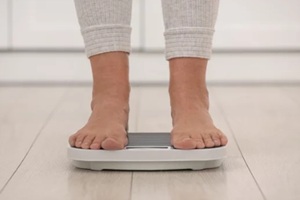
A 2021 study in Science measured daily calorie burn in more than 6,600 people spanning infancy through age 95 across 29 countries. According to the Duke University Population Research Institute’s summary of the study, energy expenditure was most stable in the 20s, 30s, 40s, and 50s, and metabolism began a gradual decline of 0.7% per year only after age 60.
The Duke summary suggests that a changing metabolism does not explain the thickening waistlines common in midlife. The Mayo Clinic attributes this at least in part to muscle loss, noting that as people age, muscle mass generally decreases while fat tends to increase, and that less muscle causes the body to burn calories more slowly. Eating the way you always have without moving more is likely to lead to weight gain.
Other Factors Behind Midlife Weight Gain
Trouble sleeping is a recognized perimenopause symptom, and the Mayo Clinic notes that people who sleep too little tend to eat more and move less. Genetics also contribute, since women whose close relatives carry extra weight around the abdomen are more likely to do the same. The Mayo Clinic describes weight gain continuing at about 1.5 pounds per year through the 50s.
Habits That Support Health During Perimenopause
Guidance from HHS and Mayo Clinic supports three habits.
- Moderate aerobic activity, such as brisk walking, for 150 to 300 minutes each week, is the adult target in the HHS Physical Activity Guidelines for Americans.
- Resistance-based exercises, like weightlifting or push-ups, should be performed on a minimum of two days per week. Mayo Clinic notes that strength training also helps maintain bone density, which decreases with menopause.
- Protect your sleep, since Mayo Clinic notes that moving more may help women sleep better, and that better sleep can make exercise easier.
Symptoms to Bring Up at Your Next Visit
Weight changes alongside irregular periods, hot flashes, or disrupted sleep are worth raising with a gynecologist. Tracking your periods and symptoms helps, because the HHS Office on Women’s Health notes that hormone levels shift unpredictably during the transition and blood hormone tests are not usually recommended without a medical reason.
Menopause and perimenopause care can include changes in diet and exercise as well as relaxation techniques. In some cases, prescription medication can help, including hormone therapy and non-hormonal options. The Mayo Clinic notes that hormone therapy may help redistribute fat that accumulates around the belly. However, that redistribution has not been tied to weight loss.
Annual GYN wellness screening visits also cover nutrition and exercise, along with breast and cervical cancer screening, and mammograms are recommended beginning at age 40. Pregnancy is still possible during perimenopause, even after a skipped period, and the HHS Office on Women’s Health advises continuing birth control until a full year has passed since the last period, so contraceptive care belongs in the same conversation.
Schedule a Perimenopause Visit with Raleigh Gynecology & Wellness

At Raleigh Gynecology & Wellness, our all-women team has cared for women for over 30 years, guiding each visit with evidence-based medicine and attention to the mind-body connection. We begin by taking the time to understand both your symptoms and your goals, and then we create a plan that addresses each of them.
To talk through weight changes or other symptoms, schedule an appointment online for perimenopause care in Raleigh or call (919) 636-6670.